

An estranged family member's death can have a huge effect upon us. The fact that they're estranged often means we hear the news out of the blue, and this can bring with it huge shock.
In this article, we'll look at how to navigate this shock and grief, attending the funeral, coping with unresolved emotions, moving forward after the loss, and much more.
An estranged family member is someone who has distanced themselves from their family or has been separated due to unresolved conflicts, differences, or life circumstances. This separation can be physical, emotional, or both which can last months, years, or even decades. Reasons for estrangement vary widely and may include disagreements, differing values, or traumatic events. For some, the relationship may feel irreparable, while others may still hold out hope for reconciliation.
Receiving the news of estranged family member's death can affect us in so many different ways. Society expects us to feel sad and down when anyone dies, but for many, that just isn't the reaction that comes to the fore - especially with an estranged family member.
Some people may feel nothing, just feeling completely hollow. For others, shock is often the first feeling we get, perhaps because we may not have thought about that family member for such a long time that when we hear the news we can be stunned into silence, not knowing how to feel.
From there, it's common to feel guilt. When we have spent so long apart from someone, it's natural to have thoughts of, "If only" that can torment us. This may force us into action, to want to do something to correct the 'wrong' that may come from feelings of regret.
Below, we'll go into what to do with these emotions and how to best cope - no matter what your circumstances are.
When an estranged family member dies, we can be flooded with a rush of emotions, some of which we may not have felt for the deceased for years or even decades.
Processing emotions at the best of times can be difficult, but even more so when in times of grief. As the 5 stages of grief teaches us, for most people, it’s common to experience grief in stages and to feel different emotions from one day to the next.
But when the emotion enters our field of consciousness or we feel the emotion in our body, it can be hard to sit with that emotion and feel what we're meant to feel. For some, these emotions can feel completely overwhelming - especially if you're alone.
Below are three different methods we think are healthy ways to process unresolved emotions in times of grief.

Journaling can be a powerful way to explore and understand the complex feelings that often surface. Writing down thoughts and memories allows you to unpack unresolved emotions in a private, safe space. It’s a gentle way to process what may feel overwhelming, providing clarity over time and helping you accept the layers of grief.

Writing unsent letters to the deceased, or to another friend or family member, can offer a way to express the words you may have never had the chance to say. Putting your thoughts on paper - even if they’ll never be read - can bring a sense of release and closure, helping to reduce feelings of regret, guilt, anger or anything else you may be experiencing.

A therapist can offer support and guidance through the unique grief of losing an estranged family member. Working with a professional can help you explore unresolved feelings, manage conflicting emotions, and find ways to navigate the loss, in a non-judgmental and compassionate space, fostering healing and personal growth over time.
It's always difficult to move forward when experiencing grief. It's also difficult to know when to move forward.
It's very important for us to sit with our emotions, to feel what's going on and to attempt to process them. It's easy in times of grief to want to distract ourselves or busy ourselves with activities or work, but in the long run, this will have a detrimental effect. But how long should we stay stewing on our thoughts and feelings before we move on with our lives? Sitting in the emotions for too long can lead to a sort of depression.
It can be really difficult to get this timing right, and moving on can come with a certain amount of guilt when we attempt to do so. We may not feel like we've given enough time to thinking about the deceased, or we may even suffer from a bit of survivor's guilt too.
The most important thing we can do is listen to our body as much as we can. Our body and our mind know when it's time, and that small, still voice inside us will tell us. But when grief overwhelms us, it can be very difficult to hear its words.
Speaking to friends or family can be super beneficial too. To get your thoughts out into the open and out of your body can bring relief and clarity, plus the advice or guidance you may receive from your loved one may help enormously.
But if listening to your loved one or your body does prove to be difficult, below are some resources and helplines that may be of help.
There is no one size fits all to this question, and you will know the answer better than anyone.
For some, the funeral may prove therapeutic, reconnecting with friends and family you've not encountered for a long time and getting some closure on a difficult relationship.
Whereas for others who have a bad relationship with family members who may be attending, the experience of going to the funeral may be a traumatic one which may be filled with conflict and a constant reminder of bad memories.
If this is the case for you, there are other meaningful ways to pay your respects. Holding a private memorial service at home, lighting a candle, or taking a moment of silence in their memory can offer a personal, comforting alternative.
You might also consider visiting a place significant to your shared past or writing a reflective note to acknowledge their impact on your life. These private gestures allow you to honour their memory in a way that feels genuine and true to your own feelings and will avoid any potential awkward or painful encounters at a funeral.
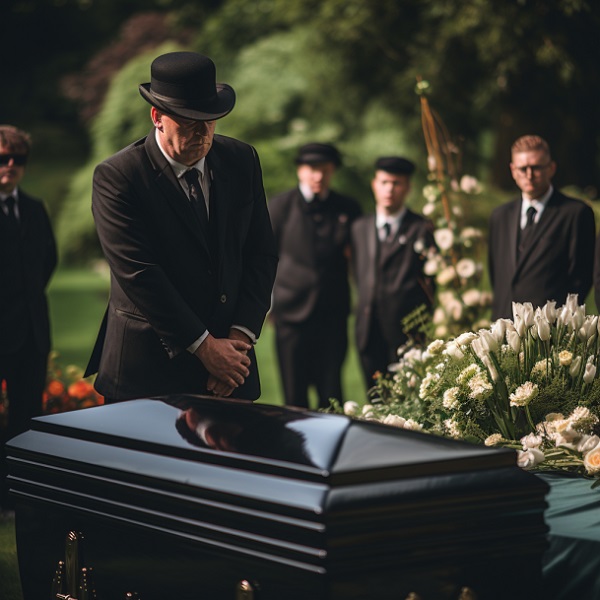
For those who have complicated family relationships, a direct cremation can be a straightforward and respectful alternative. Unlike a conventional service, a direct cremation has fewer logistical requirements, and no need for large gatherings or formal ceremonies. This simplicity often reduces the stress associated with planning and can also alleviate the financial strain that many families face.
Direct cremation provides the flexibility to honour the deceased in a less conventional way, allowing time and space to create your own farewell in whatever way you please, whenever you’re ready.
A personal memorial can be a comforting way to say goodbye after a direct cremation. You may like to consider gathering close family or friends for a small tribute, holding a private moment to scatter ashes, or setting up an online memorial where memories and photos can be shared.
These intimate gestures can allow you to honour the life of your estranged loved one in a way that feels right, providing closure and a chance for reflection on your own terms.

You call our team any time of the day, 365 days a year, and we collect the deceased from the place of death and bring them into our care.
Contact us
Whilst we care for the deceased, our customer service specialists will contact the family to book the cremation and complete all the paperwork.
Our care for the deceased
We will tell you the unattended cremation date. The deceased's ashes then can then be returned or scattered in our garden of remembrance.
Hand delivery of the ashesOur compassionate team is here to help you organise a respectful and affordable funeral for your loved one. To start arrangements, give us a call.
If your loved one is near to death and you would like more information before making funeral arrangements, you can also download a free guide to our funeral services
Call Now On 015432 12000Below are a few more resources that may come in use when remembering a loved one or when anticipating a death.

For most people, it’s common to experience grief in stages and to feel different emotions from one day to the next. You may have heard about the five stages of grief before - a model first created in the 1960s to better understand and manage grief.
Five stages of grief
Understanding what you need to do when someone dies, and when to do it, can help ease the stress and confusion you may be experiencing. Which is why we’re here to take you through the steps to know exactly what to do when someone dies.
What to do when someone dies
If you have to arrange a funeral, knowing what to do and how to handle things can make a big difference. At Distinct, we do everything we can to make arrangements as stress-free as possible. Explore our step-by-step guide to arranging a funeral.
Arranging a funeralWe offer the highest level of support, but don't just take our word for it. Below are recent reviews from customers who bought a funeral with us.





Part of

Over 76,000 cremations a year
Westerleigh Group including Distinct Cremations carried out over 76,000 cremations in 2025.